

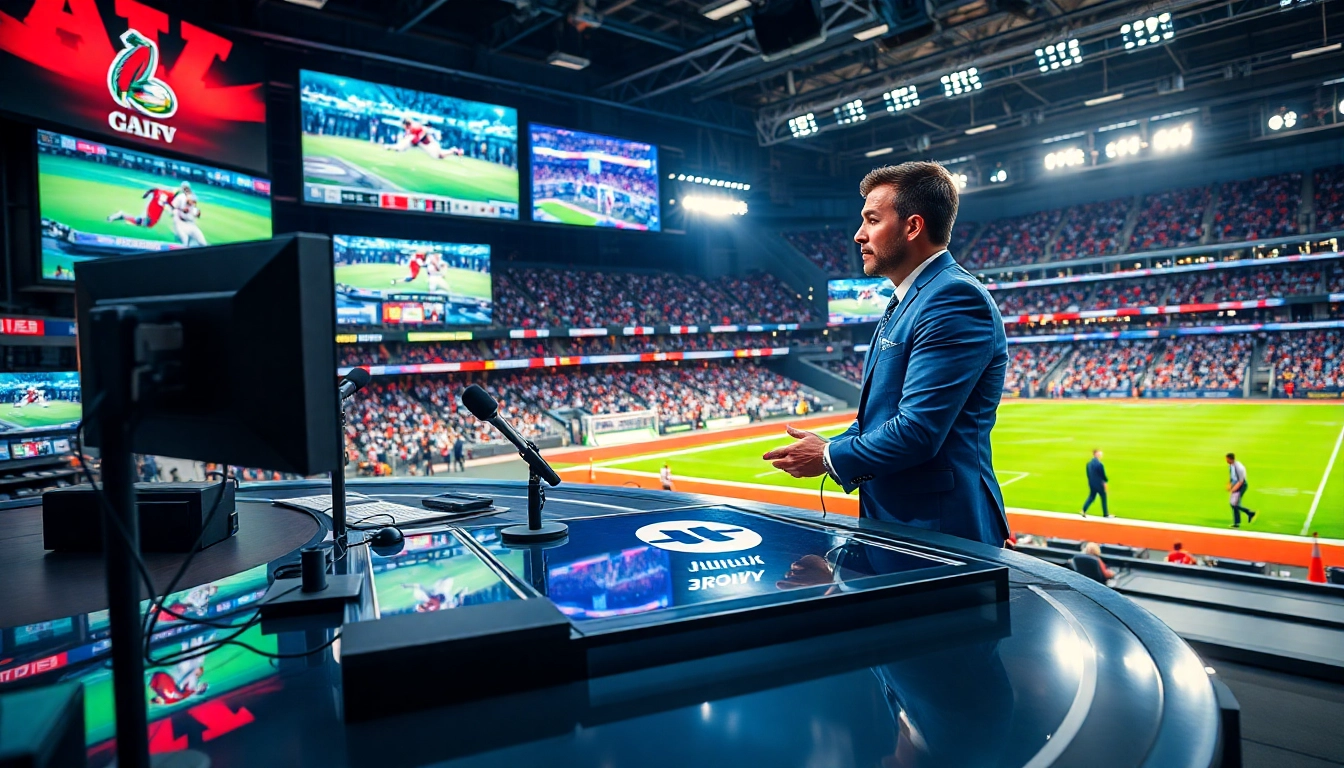
Understanding the Basics of Sports Broadcasting
What is Sports Broadcasting?
Sports broadcasting is the dissemination of sports-related content through various media channels, primarily television, radio, and digital platforms. It serves to inform and entertain audiences, providing live coverage of events, highlights, and commentary. An integral part of this field is communication, as broadcasters must convey not just information but also the excitement and emotion associated with sports. The landscape of Sports Broadcasting has evolved, incorporating multimedia elements that enhance viewer engagement.
The Role of Sports Broadcasters
Broadcasters play a pivotal role in shaping the viewer’s experience during any sporting event. Their responsibilities extend beyond merely calling the games; they often provide context, background information, and analysis. Sports producers and analysts work in tandem with broadcasters to create engaging narratives that enhance the viewing experience. They also have a responsibility to diminish bias and present accurate information, nurturing an audience’s trust in their commentary.
Types of Sports Broadcasting
There are various types of sports broadcasting, distinguishing themselves by their format and approach. These include:
- Live Coverage: Real-time reporting of games and events, often featuring play-by-play commentary.
- Highlights Shows: Summarized content showcasing key moments from games.
- Analysis Programs: In-depth discussions featuring expert opinions and statistical evaluations.
- Documentaries: Long-form content that delves into the history and intricacies of sports and athletes.
The Evolution of Sports Broadcasting
Historical Milestones in Sports Broadcasting
Sports broadcasting has a rich history, with key milestones that have shaped its current form. The first radio broadcasts in the 1920s marked the beginning of live sports coverage. Television soon followed, transforming how audiences consumed sports, with the first televised match occurring in 1936. Over the decades, technological advances catalyzed the growth of this sector, leading to high-definition broadcasts and multi-camera coverage that brought fans closer to the action than ever before.
Technological Advances Shaping Sports Broadcasting
The development of technology has consistently driven innovations in sports broadcasting. High-definition (HD) and ultra-high definition (UHD) broadcasts have significantly improved visual quality, while advanced sound technology enhances the auditory experience. The advent of digital streaming has also reshaped the broadcasting landscape, allowing fans to access live sports content on various devices, thus broadening the audience base and enhancing viewer convenience.
The Shift to Digital Platforms
In recent years, there’s been a significant shift toward digital platforms for sports broadcasting. With the rise of streaming services and mobile applications, consumers have more control over how and when they watch sports. This change has compelled traditional broadcasters to adapt, often leading to innovative content delivery methods, including interactive features and on-demand viewing options. The ongoing evolution of connectivity, through technologies like 5G, is expected to further shape the way sports content is consumed.
Essential Skills for Sports Broadcasting Professionals
Communication and Presentation Skills
Effective communication is fundamental in sports broadcasting. Professionals must articulate their thoughts clearly and engagingly, captivating their audience and maintaining interest throughout live events. Presentation skills, including voice modulation and body language, can significantly influence audience perception and engagement, marking a successful broadcaster.
Research and Knowledge in Sports
Broadcasters must possess a thorough understanding of the sports they cover, including the rules, history, and key players. Research skills are essential for preparing insightful commentary and anticipating developments during live broadcasts. Knowledge of statistics, strategies, and team dynamics allows broadcasters to provide informed and nuanced analyses, enhancing the depth of content presented to viewers.
Technical Proficiency in Broadcasting
With the technological integration in broadcasting, a solid understanding of technical equipment is increasingly important. Skills in operating cameras, sound equipment, and editing software empower sports broadcasters to deliver polished, high-quality content. Additionally, familiarity with streaming platforms and digital tools is essential in navigating the complexities of modern broadcasting landscapes.
Challenges in the Sports Broadcasting Industry
Navigating Viewership Changes
The sports broadcasting industry faces continual changes in viewer habits, largely influenced by multifaceted factors such as demographics, viewing preferences, and technological advancements. Understanding these shifts is crucial for broadcasters to adapt their strategies and content offerings to retain and grow their audience.
Dealing with Time Constraints
Time constraints are an inherent challenge in sports broadcasting, especially during live events. Broadcasters must think on their feet, providing timely and accurate commentary while managing the flow of information. Practicing and honing quick decision-making skills can help professionals navigate these pressures effectively, ensuring coherent, engaging broadcasts.
Maintaining Objectivity and Ethics
Maintaining objectivity and adhering to ethical standards is essential for credibility in sports broadcasting. Broadcasters must be cautious to avoid bias, providing balanced reporting that respects the teams, players, and audiences they represent. Upholding the highest ethical standards not only fosters trust among viewers but also strengthens the integrity of the broadcasting field as a whole.
Future Trends in Sports Broadcasting
Impact of Social Media on Sports Broadcasting
Social media platforms have dramatically reshaped sports broadcasting, allowing for real-time interaction between fans and broadcasters. Broadcasters are increasingly engaging audiences through social media, where they can share highlights, behind-the-scenes content, and panel discussions. The ability to respond instantly to viewer inquiries greatly enriches the overall experience and fosters a deeper connection between fans and sports professionals.
Emerging Technologies in Broadcasting
Emerging technologies such as augmented reality (AR) and virtual reality (VR) are revolutionizing how sports are experienced. These technologies can create immersive experiences that allow fans to feel part of the action, whether it’s through VR simulations or AR overlays providing real-time data during events. Such innovations stand poised to captivate audiences and redefine traditional viewing experiences.
Predictions for the Future of Sports Broadcasting
Looking ahead, the future of sports broadcasting appears dynamic and promising. As technology continues to advance, we can anticipate even more personalizatizations in content delivery. Innovations like AI-driven analytics could provide personalized viewing experiences based on individual user preferences. Additionally, the emphasis on interactive and immersive experiences is likely to grow, ensuring that sports broadcasting remains at the forefront of media evolution.
FAQs
1. What is the primary role of a sports broadcaster?
The primary role of a sports broadcaster is to provide live commentary, analysis, and updates during sporting events, thereby enhancing the viewer’s experience.
2. How has technology changed sports broadcasting?
Technology has transformed sports broadcasting by introducing HD and UHD visuals, streaming capabilities, and interactive features, enhancing viewer engagement and accessibility.
3. What skills are essential for a successful sports broadcaster?
Essential skills include strong communication, research capabilities, knowledge of sports, and technical proficiency with broadcasting equipment and software.
4. What are the biggest challenges faced by sports broadcasters?
Challenges include adapting to changing viewership habits, managing time constraints during live broadcasts, and maintaining objectivity and ethical standards in reporting.
5. What are future trends in sports broadcasting?
Future trends include increasing integration of social media, the use of AR and VR for immersive experiences, and personalized content delivery driven by advances in technology.